Why we treat biochar as infrastructure investment

Across the carbon removal market, many biochar developers are building promising durable carbon removal projects. But smaller, independent projects often lack the scale, risk-return profile and commercial structure needed to meet demand from large corporate buyers and attract mainstream infrastructure investment.
While still a nascent asset class, well-structured biochar projects can offer a compelling investment case. When developed with the right contractual frameworks, feedstock strategies and operating models, biochar assets can combine attractive risk-adjusted returns with durable carbon removal at scale.
The challenge is therefore not just how to deploy more projects. It is transforming singular, fragmented developments into commercially viable, de-risked, industrial scale assets, capable of attracting institutional capital. This thinking underpins A Healthier Earth (AHE)’s approach to project development, building a portfolio of investable assets under our integrated biochar carbon removal platform.
A familiar investment case in an emerging asset class
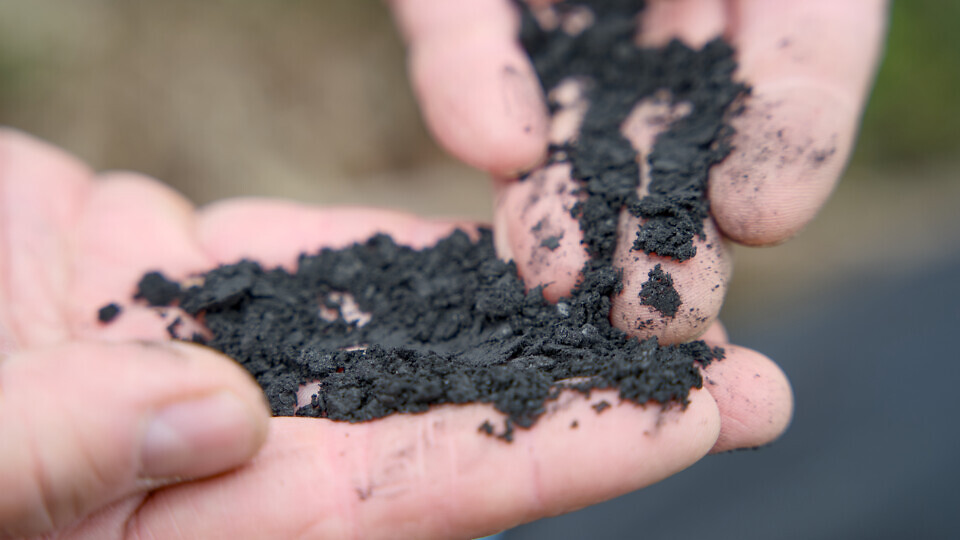
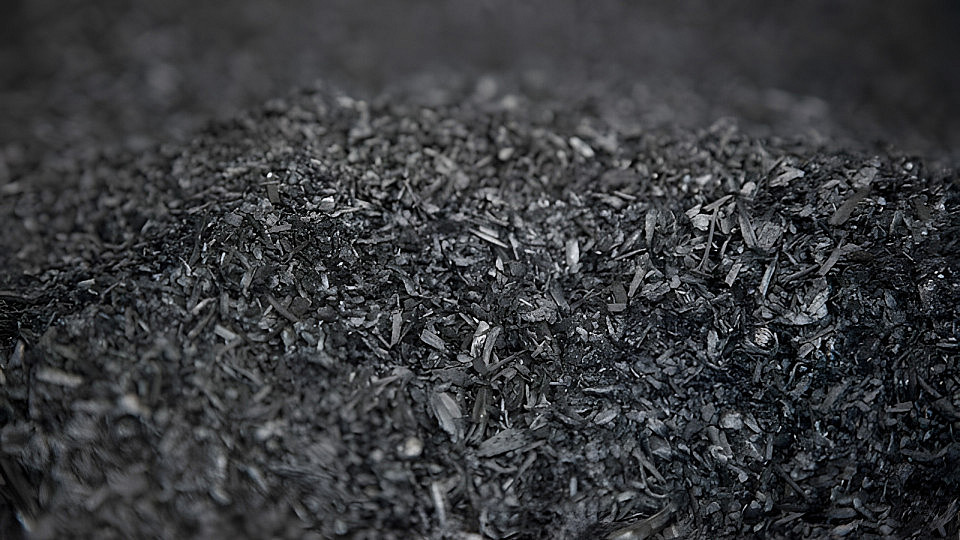
Biochar, created when end-of-life organic biomass undergoes a process called pyrolysis, locks away carbon in stable form for centuries and generates carbon dioxide removal (CDR) credits when used in relevant use-cases.
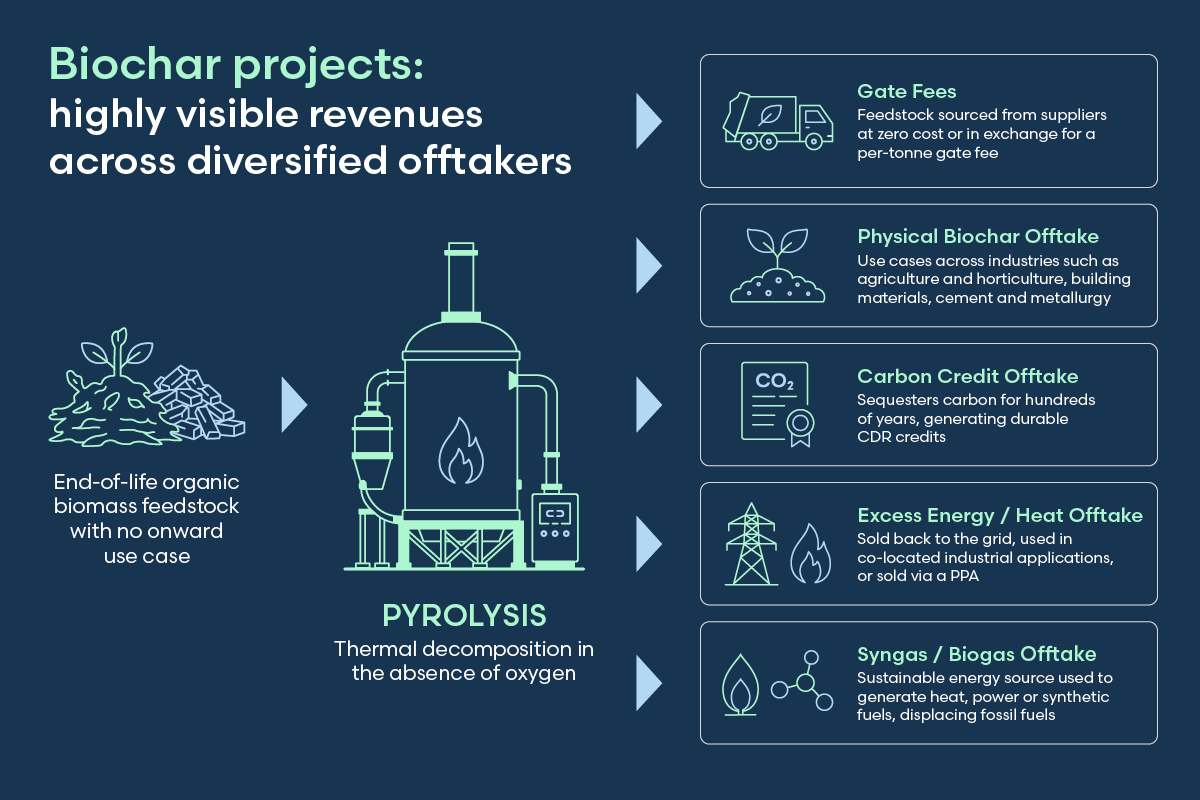
As such, biochar assets reflect the credit fundamentals of typical infrastructure asset classes such as energy from waste (EfW), combined heat and power (CHP), or biomass – by generating long-dated contracted cash flows from diversified revenue streams.
For investors, this means the opportunity can be assessed through a familiar lens: highly visible revenues, predictable cash generation and clearly allocated risk. For biochar projects, these revenue streams are spread across industries and offtake counterparties, from CDR credit buyers to biochar and energy purchasers, minimising reliance on a single market or price assumption.
AHE’s approach – contracted revenues and clearly allocated risk
Our projects are underpinned by long-dated, take-or-pay offtake contracts that commit buyers to agreed volumes and payments. This is consistent across revenue streams, with tenor alignment to supply contracts and cost-pass through mechanisms mitigating offtake price volatility and feedstock supply risks.
This creates assets that deliver highly visible, predictable, and stable cash flows. Project viability is then tested against free cash metrics across downside scenarios, with debt and equity financing capacity sized accordingly. Projects under the platform are selected for their commercial viability, typically delivering unlevered yields of 14-17%.
AHE’s approach to project development ensures clear, contractually defined risk allocation across project stakeholders, including engineering, procurement and construction (EPC) and operations and maintenance (O&M) contractors, machinery and feedstock suppliers, debt and equity investors, and offtakers.
Clearly defined supply and offtake obligations, long-term warranties, liquidated damages for critical machinery and components, and milestone-linked contractor agreements are all designed to minimise execution risk, align counterparties, and enhance the deliverability of project cash flows, even in downside scenarios. Projects benefit from further downside protection under creditworthy, inflation-linked, bankable offtake agreements including guaranteed price and volume provisions.
Our integrated biochar CDR platform is built to align the requirements of hyperscalers and global corporate carbon credit purchasers, biochar project developers, and infrastructure investors across Europe and beyond.
By aggregating CDR credits at scale from a portfolio of underlying high quality biochar assets, we can offer large corporate credit buyers de-risked, secure volumes of durable credits from high quality, viable biochar projects, while project developers under the platform benefit from long-dated, high-volume offtake. By design, platform credits are fungible, insulating our offtakers and investors from project underdelivery risk.
To seasoned infrastructure investors, many of these characteristics will sound familiar. At AHE, we leverage these credit fundamentals to design projects that deliver consistent free cash flows, withstand sector tailwinds and cost and revenue pressures, and ensure project execution and operation is contractually de-risked.
Projects are modular, scalable and replicable, with predictable unit economics
Because pyrolysis machinery is modular and not tied to a specific geography, biochar projects are well-suited to a wide range of markets. Combined with repeatable structures and standardised plant designs, projects have highly predictable unit economics and are suited to portfolio rollout structures. This aligns closely with how investors build and scale platforms across traditional infrastructure asset classes.
The modularity of the technology also allows capacity to be deployed in phases, with additional units added to existing sites as feedstock supply, operational performance and offtake demand are proven. Expansion capex can therefore be committed incrementally against an operating asset with established permits, site infrastructure and supply chains, materially reducing the per-tonne cost and risk of additional capacity. For investors, this mirrors the brownfield expansion optionality found in traditional infrastructure, enabling capital to be staged alongside contracted demand rather than deployed upfront on speculative volumes, and limiting exposure to stranded or underutilised assets.
Reliable supply of suitable feedstock is a fundamental criteria for any viable biochar project. Well-situated projects with structured feedstock sourcing arrangements are therefore highly insulated from competition. The technical knowledge and delivery capability required to develop, deploy and operate a successful site further creates barriers to entry.
Compared to other carbon removal asset classes such as bioenergy with carbon capture and storage (BECCS) and direct air capture (DAC), biochar benefits from proven technology and a relatively short gestation period. The market for pyrolysis machinery is also becoming increasingly mature and competitive, helping to reduce technology risk as equipment becomes more efficient, specialised, and moves down the cost curve.
Climate infrastructure is quickly becoming essential infrastructure
These investment characteristics are becoming increasingly important as demand for durable carbon removal shifts from a sustainability concern to a commercial imperative.
Demand for durable CDR is at an all-time high, as carbon intensity and fossil-fuel reliance become commercial considerations for corporate supply chains rather than standalone ESG initiatives. Responsibility for procurement is shifting away from sustainability generalists to specialist commercial teams and dedicated carbon-buying desks. As a result, certified durable removals are scaling fast, often through multi-year contracts, while physical credit issuance through registries continues to grow at pace.
The AI-driven data centre boom is pushing up emissions and fossil-fuel demand, widening the gap between hyperscalers’ growth and sustainability goals. At the same time, geopolitical instability is making fossil-fuel supply chains more precarious and energy markets more volatile, strengthening the commercial case for cleaner alternatives across major industries.
As these dynamics evolve, the voluntary carbon market is rapidly pivoting away from theoretical promises and future commitment towards commercial execution and delivery, strengthening the case for investment at scale in essential climate infrastructure. At the same time, landmark frameworks like Carbon Direct’s CDR 2.0 have introduced greater project-finance rigor to the space, forcing suppliers to focus on “procurement of performance” and actual delivery.
Since biochar is well positioned to deliver meaningful, durable and executable carbon removal at the required speed and scale, momentum is building for a biochar CDR compliance market . The EU Emissions Trading System (ETS) is under legislative review, with potential amendments to include biochar as a compliant technology – potentially unlocking a regulated market of up to 250 million tonnes of compliance-driven carbon removal purchases.
Building biochar into an investable asset class
Durable carbon removal will not scale through fragmented deployment alone.
It requires commercially viable, de-risked projects capable of attracting the institutional capital needed to accelerate delivery. AHE’s integrated biochar CDR platform is designed to help make that shift possible, connecting high-integrity project development with the confidence buyers need and an infrastructure-grade opportunity for investors.
Building on our own experience, and expert voices from across the biochar value chain, we created The Biochar Blueprint: A Developers Guide to Scale. In it, we lay out the essential steps to build biochar operations that attract capital through de-risked and bankable assets and meet the needs of carbon credit buyers through industrial scale, integrity and performance.
Speak to us to find out more.
Related content

Why we treat biochar as infrastructure investment
Learn more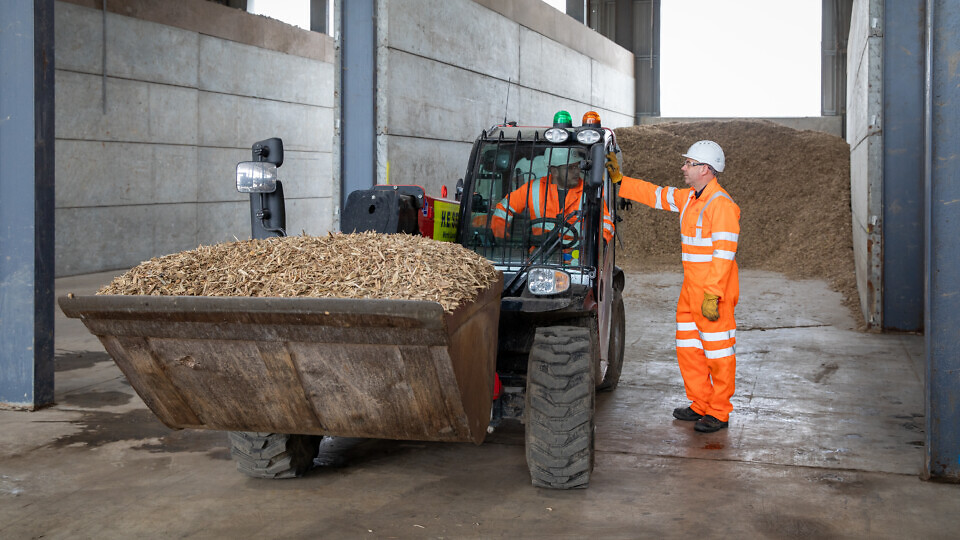
Biochar's quiet bottleneck isn't demand, it's feedstock
Learn more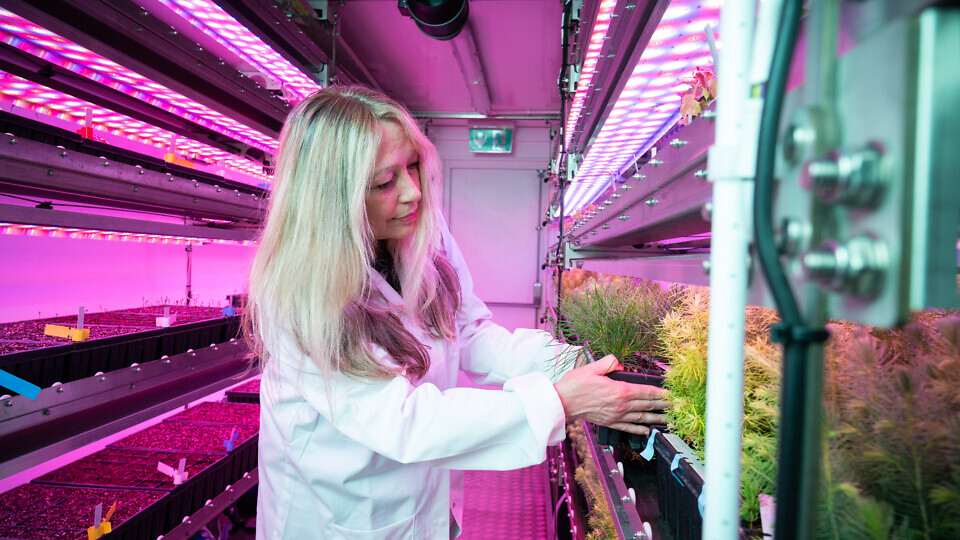
The future of biochar CDR depends on credible, science-led applications
Learn more
Building partnerships that grow into profitable environmental projects
Learn more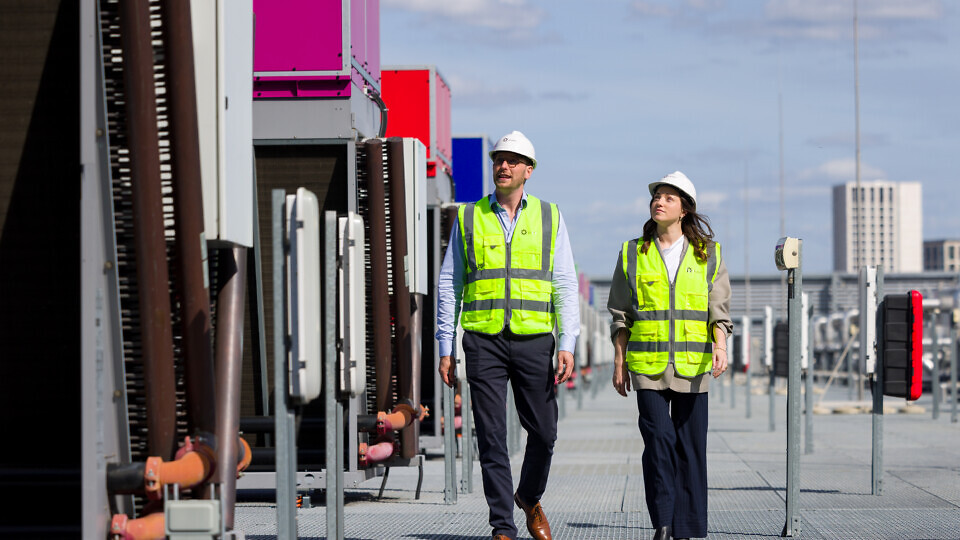
The three rules of building a bankable CDR market
Learn more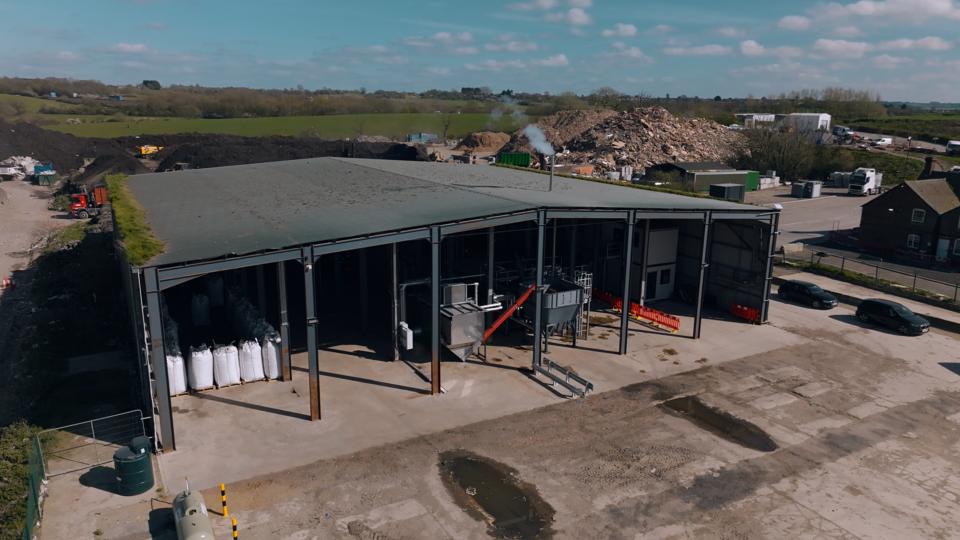
Pure DC’s A Healthier Earth Subsidiary Launches World’s First Integrated Carbon Removal Platform from the Data Centre Sector
Learn more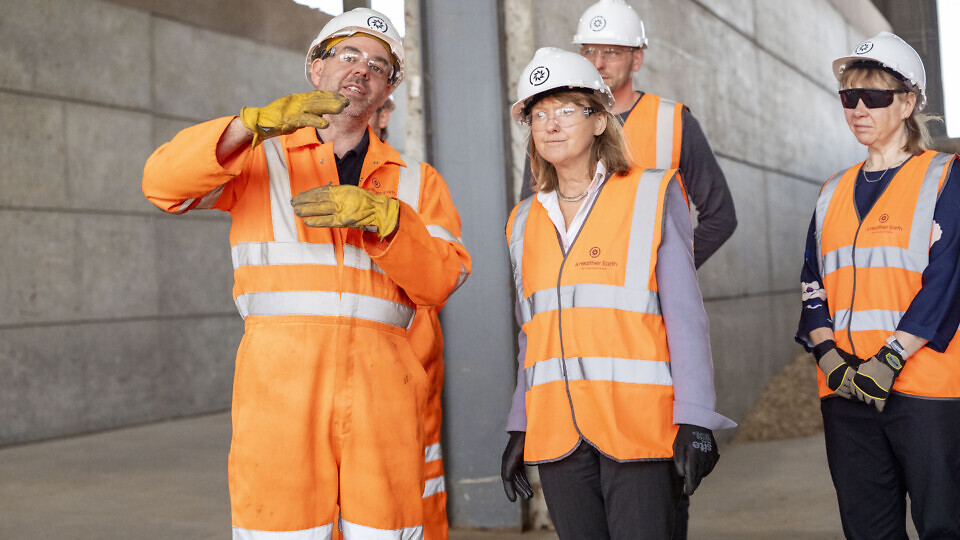
MP visits A Healthier Earth’s PureBiochar facility in Royal Wootton Bassett
Learn more
The UK’s largest biochar production facility driving carbon removal at scale
Learn more
ForestFactory® is featured on BBC Countryfile at Blenheim Palace
Learn more
A Healthier Earth and Cefetra secure £1.34m DEFRA grant to develop biogenic low carbon fertiliser for UK farmers
Learn more