Power
As power networks strain under rising digital demand, data centres can be part of the energy solution. Pure DC is pioneering the use of batteries, flexible services and clean fuels to support reliable, sustainable energy distribution.
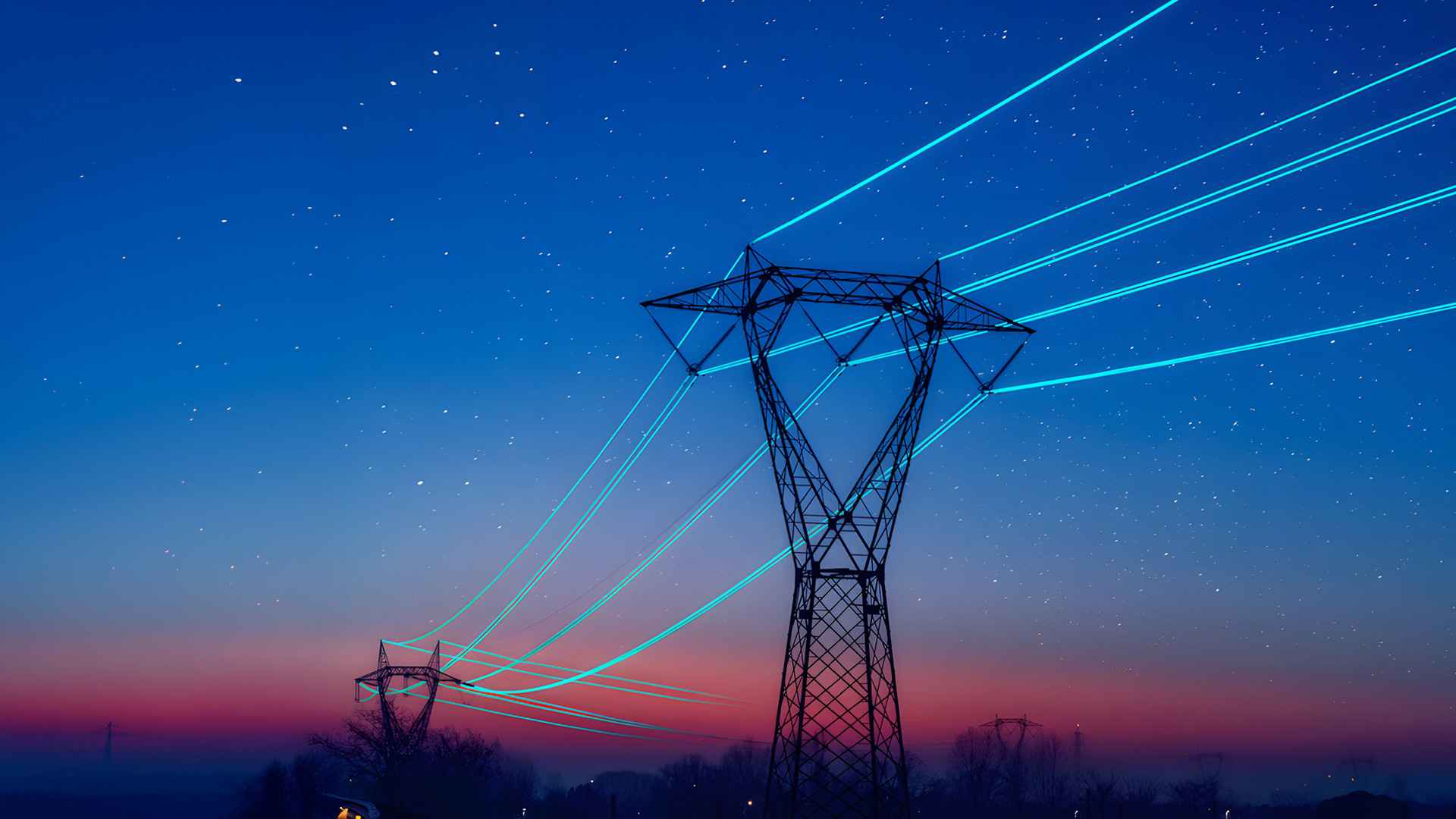
How Data Centres Can Help Solve the Power Problems of Our Digitised Future (…without it costing the Earth)
Data centres have turned pockets of the UK and Ireland into digital strongholds – but the power network that feeds them is creaking.
The M4 corridor from London to South Wales now hosts Europe’s premier data centre cluster, largely because of its backbone of ‘dark fibre’ – dormant data cable ready to be leased or purchased. Such cable is often laid when motorways are built.
The area west of London has good access to power and is close enough to the capital to minimise latency issues, providing very fast data transmission.
Dublin’s T50 loop has created a similar major data centre market in Ireland. This in turn encouraged investment from cloud computing providers to centre their infrastructure around those areas.
The edges of these data zones will continue to creep outwards, to accommodate users with lower latency requirements. However, major AI and cloud providers still prefer proximity to those cloud hubs as ‘AI inference services’ – models that have been trained specifically for applying analysis to specific data sets – emerge.
This means that demand in some constrained areas remains red-hot. Grid utilisation at peak periods can exceed 95 per cent in these locations. Because of a lack of energy supply, new datacentre projects in the UK are being given grid connection target dates well into the mid-2030s, while Ireland faces similar capacity availability pressures.
Power infrastructure built over 40 years ago, for a different era, is now struggling to cope with burgeoning digital enterprises and use cases covering every aspect of our lives. Unless we unlock new capacity, Britain and Ireland are at risk of hampering their digital economy and inadvertently encouraging hyperscale customers to invest overseas.

50%
The UK is committed to sourcing around 50 per cent of its electricity from renewables by 2030
To make things even more difficult, governments are racing to decarbonise power generation. The UK is committed to sourcing around 50 per cent of its electricity from renewables by 2030, much of it situated offshore or in Scotland, far from major load centres – while Ireland pursues even greater renewable generation and similar proximity issues.
All these pressures are putting enormous strain on our ageing transmission networks. Britain already spends close to £1 billion a year paying wind farms to switch themselves off because the network cannot move energy from the windy north to the demand-hungry southeast, just one example of existing congestion and expensive curtailment.
National Energy System Operator (NESO) has warned that, without radical reform, constraint costs could quadruple by the end of the decade. While constraining costs as part of curtailment strategies exceed £1 billion per-annum, it is still preferred over the risk of mass black outs. In addition, national energy strategies in both the UK and Ireland mandate that 20-30 per cent of demand must be flexible by 2030, under initiatives such as NESO’s Clean Power 2030, heightening the urgency for new models, particularly when Ireland’s non-compliance fine currently sits at around €20 billion under EU rules.
The March 2025 Iberian blackout affected nearly 10 million customers and showed how a single fault can cascade into a wider collapse when a power network lacks the characteristics and reserves to deliver energy where it’s needed in an instant. A transmission line fault in southern Spain overloaded adjacent lines, triggering a cascade of trips that plunged large areas of Spain and Portugal into darkness.
Labour’s recent Modern Industrial Strategy described two key measures to address power problems in the UK:
- The Connections Accelerator Service to fast-track grid access for “strategic demand” like AI campuses.
- The British Industrial Competitiveness Scheme to cut standing network charges by up to 90 per cent for energy intensive sectors, with a consultation under way on extending the relief to AI data centres and advanced manufacturing.
Those are welcome initiatives, but data centres are still being treated mainly as consumers, not contributors.
Data centres can play a much bigger role as part of the energy solution. By coinvesting in network reinforcements, participating in demand flexibility services and deploying on-site battery energy storage systems (BESS), data centres can offer genuine grid support.
At Pure DC we are introducing BESS units which can dramatically reduce evening peak draw. The same batteries can absorb surplus renewables during periods of curtailment, then discharge to steady frequency and voltage, delivering the fast-acting response services system operators now prize. We’re also implementing dynamic load scheduling and virtual-utility controls that switch between grid, storage and low-emission generation in milliseconds.
Beyond this, alternative commercial models – such as time-of-use tariffs, long term green Power Purchase Agreements (PPAs) paired with on-site storage, and non-firm connection agreements – can give operators financial incentive to offer flexibility and avoid bypassing network charges.
Analysis for the National Infrastructure Commission shows that maximising demand-side flexibility could trim whole system costs by around 15 per cent – sparing consumers billions in future network charges. Energy UK’s Powering the Cloud report adds that smarter siting and faster connections for data centres could unlock £44 billion in extra Gross Value Added (GVA) between 2025 and 2035 and keep the UK’s digital infrastructure growing instead of migrating to lower cost grids abroad.
Pure DC is one of the early adopters of biomethane purchase agreements both at a national and European level and is proud to be working closely with producers and national suppliers to support the development of the biomethane market, in line with Ireland’s ambition of producing 5.7 TWh per annum by 2030.
Pure DC is ready to work with governments, regulators and grid operators to put these, and other, ideas into practice. For example, we already operate HVO-fuelled, battery-equipped campuses in the UK and Ireland and we are exploring Small Modular Reactors for zero-carbon resilience. We stand ready to trial flexibility-first connections, turning data centres into active grid partners.
With partnership across government, with nimble thinking to encourage alternative strategies, data centres can sustain, rather than strain, the modern power network.
Pure thinking
We think deeply about the issues facing digital infrastructure, the communities in which we operate and the challenges facing the environment.

Alternative Energy
From replacing diesel with HVO to trialling biomethane, we are continually exploring alternative fuels to power our sites.

Economic benefits
Pure DC data centres power more than the cloud – they power economies.

Jobs and Skills
Behind every Pure DC campus is a human story. Our projects generate thousands of jobs for diverse talent.
Power
As power networks strain under rising digital demand, data centres can be part of the solution.

Water
Water is one of the planet’s most precious resources. That’s why Pure DC builds data centres with minimal water impact.

Our business model
We combine investment discipline, technical expertise and long-term partnerships to unlock capacity in the world’s most constrained markets, delivering sustainable digital infrastructure that creates lasting value for customers, investors, and communities.

Sustainability
At Pure DC, we’re redefining what responsible digital infrastructure looks like.

Biochar
From cooling urban spaces to boosting tree survival and rice yields, we’re helping unlock biochar’s full potential beyond net zero.