Biochar’s role beyond net zero
From cooling urban spaces to boosting tree survival and rice yields, we’re helping unlock biochar’s full potential beyond net zero.
Biochar’s role beyond net zero: from greener cities to stronger forests
As the race to net zero accelerates, biochar is emerging as a powerful climate solution for industries like digital infrastructure, with potential to lock away carbon in stable form for centuries. While high-profile technologies like direct air capture dominate headlines, biochar has already delivered the lion’s share of carbon dioxide removal (CDR) projects globally, accounting for 80% of project deliveries in Q3 2024. But biochar’s true value isn’t just carbon removal. Through tailored applications, biochar is proving to be a remarkably versatile solution to local environmental challenges.
Strong local applications are key to its scaling. By building a consistent, credible market, grounded in proven use cases, biochar can shift from a promising tool to a mainstream climate solution. This is why Pure DC, through its climate tech arm, A Healthier Earth, focuses on R&D into how biochar can address such challenges.
By grounding business innovation in real-world science and impact, we can accelerate biochar’s adoption and applications.
Supercharging urban adaptation projects
Cities are on the frontlines of climate change, facing heatwaves, air pollution, and biodiversity loss. Urban green infrastructure such as living walls can act as a lifeline; cooling, filtering air, supporting biodiversity and improving wellbeing. And incorporating biochar can help supercharge their impact.
For example, we’ve conducted extensive research on the effects of incorporating biochar into the growing substrate of living walls. We found that biochar can reduce water requirements in living walls by up to 60%.
In Brent, North London, biochar will be used in the living wall we’re building – one of the world’s largest – spanning 7,400 square metres and featuring over 750,000 plants. We’re now working on research into using biochar to replace peat completely in the substrate, which damages critical peat carbon sinks when extracted. In contrast, biochar enhances soil quality while actively locking away carbon, while making the wall far more efficient to maintain.
80%
Biochar has delivered the lion’s share of carbon dioxide removal (CDR) projects globally.
35%.
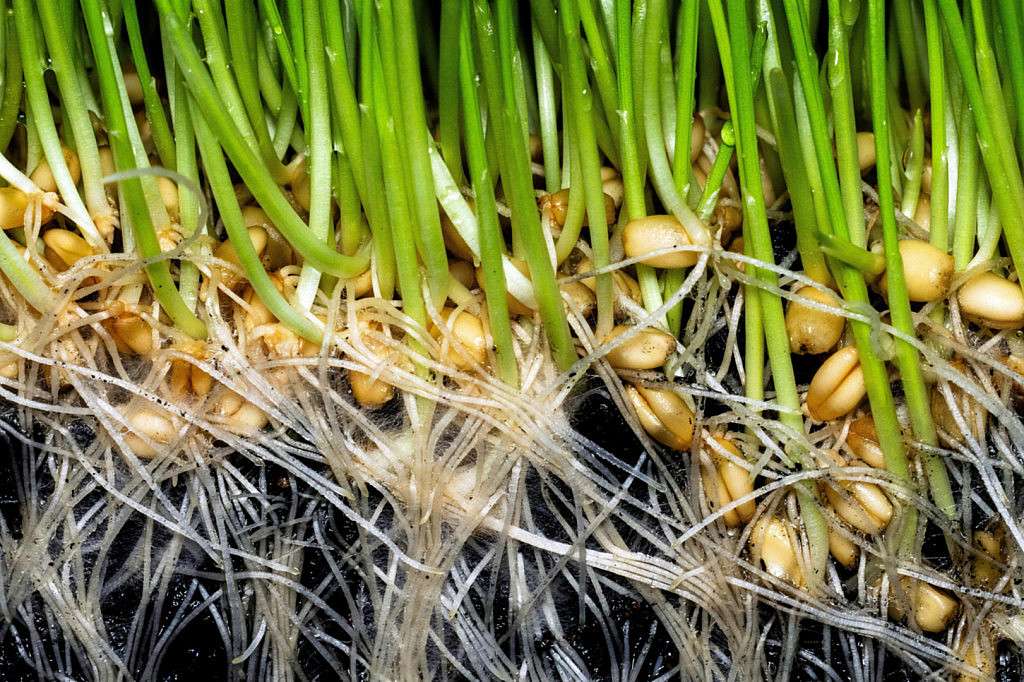
Early results show that biochar increased the number of panicles (grain-bearing stems) per rice plant.
Boosting struggling forests
Reforestation is a cornerstone of the UK’s climate strategy, but survival rates for saplings are plummeting due to drought, heat, and disease. Independent analysis by The Value Engineers (2025) found that mortality rates have doubled over the last decade from 15% to 30%, and landed estates like Blenheim Palace are experiencing a mortality rate of up to 90% in some species.
To tackle this, we developed ForestFactory®, in partnership with Blenheim Palace, combining vertical farming and tailored growing recipes with biochar-enriched soils. Initial results indicate that biochar positively affected seedlings of a range of species, nearly doubling stem diameter growth and improving seedling height by 19% over four months, compared to 10.6% in non-amended soil. We’re now expanding trials to test how biochar can support drought resilience and long-term survival.
Increasing food security
In West Papua, Indonesia, declining rice yields and high methane emissions from traditional flooded paddies are threatening food security. This accelerates rainforest deforestation, as land is cleared for agriculture, only to be abandoned when it becomes unviable.
We’re working to test how biochar can revive degraded land used for rice farming and reduce pressure on forests, helping reverse this trend. Early results show that biochar increased the number of panicles (grain-bearing stems) per rice plant by over 35%. We’re now exploring its potential to boost grain yield, reduce fertiliser use, and cut methane emissions, with the goal of creating a scalable model for rice farming.
Bringing biochar into the mainstream
Biochar is no longer just a ‘promising idea’; it’s a practical solution ready to be deployed. We need credible markets, supportive policy, and investment in real-world applications, and local projects show what’s possible when science and market-making come together.
Pure thinking
We think deeply about the issues facing digital infrastructure, the communities in which we operate and the challenges facing the environment.
Alternative Energy
From replacing diesel with HVO to trialling biomethane, we are continually exploring alternative fuels to power our sites.
Economic benefits
Pure DC data centres power more than the cloud – they power economies.

Jobs and Skills
Behind every Pure DC campus is a human story. Our projects generate thousands of jobs for diverse talent.
Power
As power networks strain under rising digital demand, data centres can be part of the solution.

Water
Water is one of the planet’s most precious resources. That’s why Pure DC builds data centres with minimal water impact.

Our business model
We combine investment discipline, technical expertise and long-term partnerships to unlock capacity in the world’s most constrained markets, delivering sustainable digital infrastructure that creates lasting value for customers, investors, and communities.

Sustainability
At Pure DC, we’re redefining what responsible digital infrastructure looks like.
Biochar
From cooling urban spaces to boosting tree survival and rice yields, we’re helping unlock biochar’s full potential beyond net zero.