Debunking the Myths Around Data Centres
Data centres have become essential infrastructure, yet public debate is still shaped by common misconceptions. Tackling these myths is vital to delivering digital capacity that is efficient, responsible and fit for long-term demand.
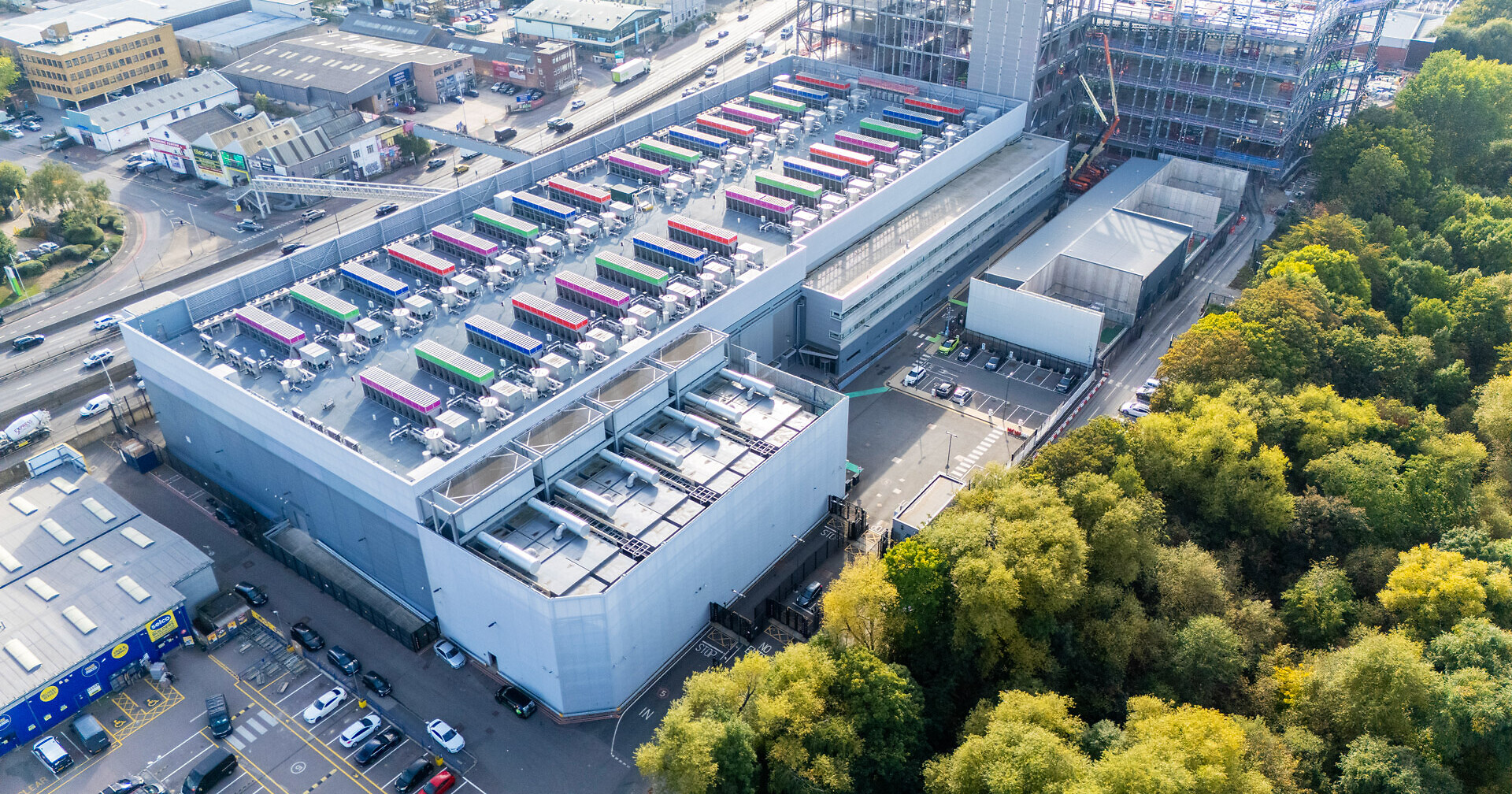
As digital demand driven by cloud services, AI, e-commerce, public services and everyday consumer behaviour accelerates, data centres have become essential infrastructure. Yet public discussion often lags behind how these facilities are actually designed and operated today.
Misconceptions influence planning debates, shape community sentiment and, at times, skew policy thinking. Tackling these myths is vital if the UK is to build the digital capacity it needs in a way that is responsible, efficient and genuinely rooted in place.
Here are five of the most common misunderstandings, and the realities behind them.
Myth 1: “Data centres consume vast amounts of water”
Early data centres often relied on water-based cooling, but that is no longer the case. Most modern designs in the UK and Europe now use air-based or hybrid cooling systems that significantly reduce, or in many cases eliminate, operational water use.
Where water is required, it is usually within closed-loop systems that recycle the same volume repeatedly. Recent UK analysis shows that more than half of English data centres now use waterless cooling, and roughly two-thirds consume under 10,000 m³ of water a year, which is less than 0.1% of a single day’s national use. Increasingly, operators also deploy sustainable drainage, green infrastructure and rainwater harvesting to reduce reliance on mains supply while supporting biodiversity and managing stormwater.
Myth 2: “Data centres don’t create meaningful jobs once construction ends”
The workforce of a data centre is certainly more specialised and smaller in number than during construction, but it’s important to look at the wider and long-term impact these facilities have on local employment and skills. Construction spans several years and involves engineers, construction workers and technical specialists across multiple trades.
Once operational, a data centre supports a steady ecosystem of engineering, maintenance, security, administrative and facilities roles. Many operators also partner with colleges and training providers to help people enter technical careers. In regions where digital infrastructure has clustered, including parts of West London and Dublin, data centres have become anchors for stable employment, specialist supply chains and long-term skills development. Their job profile differs from traditional industrial uses but increasingly aligned with what modern economies require.
Myth 3: “Data centres strain the grid, cause local power shortages, and increase prices for domestic energy”
Large energy users inevitably draw attention, but new data centres are planned in a far more coordinated way than many assume. Developers work closely with grid operators and local authorities to map capacity, fund upgrades where necessary and ensure long-term resilience. In practice, this often leads to improved substations and strengthened local electrical infrastructure that benefit surrounding businesses as much as the data centre itself.
Modern facilities also incorporate substantial on-site resilience, from battery systems that can smooth demand to backup generation configured for renewable or low-carbon fuels. Advanced controls help operators manage peaks and troughs in demand more intelligently. There is also growing momentum behind the use of waste heat to support district-heating networks, with systems already in place in parts of Europe and features built into new UK sites so they can connect as networks emerge.
…and increased home energy costs – that’s just not the way energy pricing works! Your domestic energy price is completely unrelated to whether you have a data centre in your borough. Your domestic energy bill is driven by the price of wholesale gas nationally to generate electricity, along with Ofgem’s regulatory framework.
Myth 4: “Data centres are visually intrusive buildings that lower neighbourhood quality”
The early era of data centres often prioritised function over design. Today, planning expectations and community engagement have transformed how data centres are delivered. Mechanical equipment is increasingly housed indoors or within acoustically treated enclosures, significantly reducing noise potential beyond the site boundary. Cooling technologies are quieter, and detailed modelling ensures compliance with tight noise limits. Visual impact is treated just as seriously. Modern campuses use varied façades, green buffers, landscape design and tree planting to reduce scale and soften edges. Living walls, biodiverse planting and green roofs help integrate buildings into their surroundings, particularly in urban areas. With thoughtful design, modern data centres can sit comfortably within neighbourhoods, and in some cases improve previously underused, brownfield, or industrial land.
Myth 5: “Data centres offer little benefit to local communities”
The notion that data centres operate in isolation no longer reflects how responsible developers work. Planning obligations increasingly require commitments to employment, skills, community investment and public-realm improvements, and many operators go further. This can include funding training programmes, supporting schools and colleges, contributing to biodiversity projects or creating new community spaces. The economic impact is also substantial. Construction stimulates local business activity for several years, and once operational, data centres generate significant business rates revenues which can be reinvested into frontline services, supply-chain spending and ongoing demand for specialist services. For nearby communities, the benefits often take the form of career pathways, improved public spaces and targeted support for local organisations.
Why debunking these myths matters
The UK’s digital economy depends on reliable, modern infrastructure, but to deliver it also needs public confidence. Data centres cannot be exempt from scrutiny and nor should they be. What matters is ensuring new facilities are efficient, resilient and designed with the communities around them in mind. Recent developments across the sector, from low-impact designs at Pure DC’s Brent Cross campus to long-term skills programmes linked to our data-centre clusters in Dublin, as well as the commitments built into the SEGRO–Pure DC partnership at Park Royal, show how these principles translate into practice.
As demand grows, the conversation must move beyond outdated assumptions and focus on how digital infrastructure can be planned with foresight which supports economic opportunity, strengthens local environments and builds public trust in the systems that underpin an increasingly digital society.
Dispelling myths is central to that, helping policymakers, planners and residents assess proposals on their merits rather than misconceptions.
#BuildingTheDigitalBackbone #DataCentres #SEGRO
This article is part of a series delivered by the Pure DC and SEGRO joint venture which will be delivering a fully fitted data centre in Park Royal. The series combines Pure DC’s expertise as a leading developer and operator of critical digital infrastructure with SEGRO’s 20 years of experience delivering modern, high quality data centre shells to create Europe’s largest cluster in Slough. The series will cover a wide range of topics including how data centres support communities, drive innovation and power economic growth and enable everyday life.