Sustainability by design: the Pure Data Centres approach
From the basis of design around our campuses, to the way we engage with local communities, and our approach solving national challenges, we believe data centres can be a catalyst for regeneration and positive environmental change, delivering long-term improvements for communities.
We embed sustainability measures into every project at every stage, from planning and construction through to operation. Because we not only build, but then operate our data centres, we take a long-term view on everything we do. Pure DC becomes part of the communities where we operate. We take responsibility for our environmental footprint and our social impact, holding ourselves to science-based targets.
While data centres have historically been hidden, grey, and functional, we believe a Pure data centre should be part of the local story, not just the digital one. We believe they can exist in harmony with the communities and environments around them. That they can clean air, encourage biodiversity, create jobs, and bring nature back to the places that need it most.
When you begin with intent, apply curiosity, and build with care, you don’t have to choose between environment and infrastructure.
Pure DC, together with our climate tech R&D subsidiary, A Healthier Earth, is committed to building data centres that realise this potential.
Our Campuses: Sustainability By Design
Our long-term approach informs every decision we make, including the materials we use in construction, the way we power our data centres, minimising water use and our commitment to biodiversity.
Our targets, validated by the Science Based Targets initiative, include reaching net zero operations by 2030, with a 15 per cent reduction in construction emissions.
Across all our sites, we’re shifting to renewable and low-carbon energy, already avoiding thousands of tonnes of emissions since 2022.
At our Brent Cross site in London, we’re constructing one of the world’s largest living walls – designed to absorb air and noise pollution, capture carbon, and boost biodiversity by creating habitats for local wildlife.
We have implemented hydrotreated vegetable oil (HVO) for backup and short-term primary power generation at sites in London and Dublin – reducing carbon emissions and improving air quality. HVO has proven to be a seamless, low-disruption alternative to diesel, offering up to 85 per cent lifecycle carbon savings and delivering measurable environmental benefits without operational compromise. Elsewhere we’re trialling the use of fuels including bio-methane to research responsible alternatives to traditional power generation.
We’re also focused on reducing water impact. Our closed-loop cooling systems avoid drawing on local water supplies and, at Brent Cross, the world’s first use of biochar in a living wall will cut water usage by up to 60 per cent. Through the reduced water usage from biochar we’re also able to reduce the size of our run-off tanks – which means less excavation, and fewer carbon emissions as we build.
Once built our data centres continue the focus on responsible operations. For example, all our eligible data centres (London, Dublin, and Jakarta) have achieved zero waste to landfill certifications.
Our Communities
From the outset, we seek opportunities to deliver meaningful, long-term value for the people living and working near our campuses.
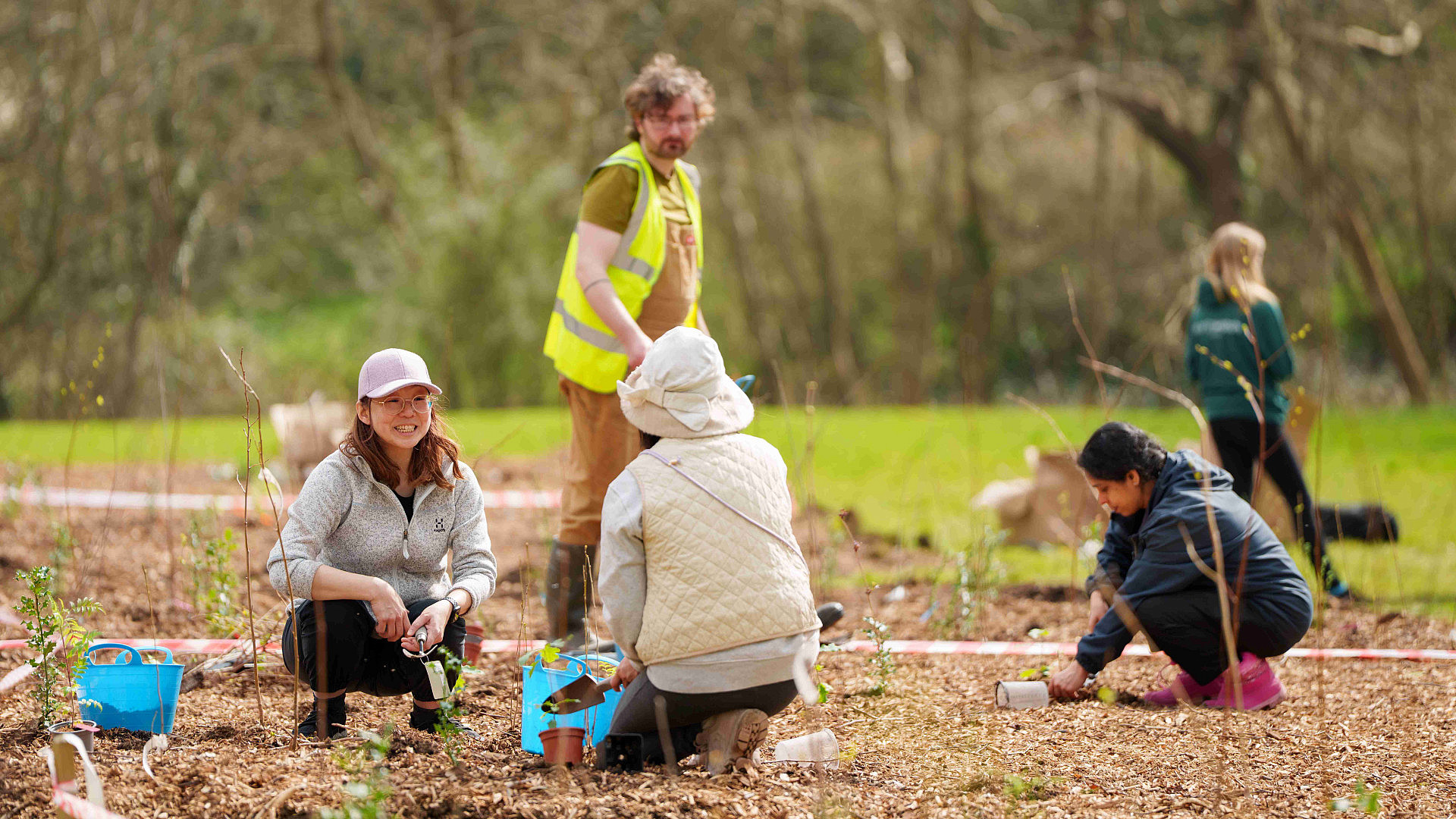
In north London, we’ve partnered with Barnet Council and environmental charity Earthwatch Europe to plant three ‘Tiny Forests’ to improve air quality, increase biodiversity, and offer accessible green space for the community.
We are providing funding and resources to Seeds for Growth, to develop two school gardens in the London Borough of Brent to bring much needed green space to schools where children don’t always have access to nature and gardens. A third school in Brent is benefiting from a living wall installation which students helped to plant.
Our communities can also benefit from the waste heat produced on site. Many of our campuses offer connection points to use this heat to help decarbonise housing, local industry and public buildings.
Our World
Nationally and globally we offer solutions for carbon removal and climate adaptation through innovation, investment and infrastructure. Many of our projects focus on a nation’s largest challenges including improving rice yields in Indonesia and de-desertification in the UAE – both of which could be key to improving domestic food security.
Internationally, we continue to invest in climate-positive projects, including a food forest programme in West Sumatra, Indonesia, which restores degraded land through agroforestry while supporting local communities.
In 2025, we will launch the UK’s largest biochar production facility, capable of producing up to 9,000 tonnes of biochar annually and capturing 17,000 tonnes of carbon dioxide. That’s roughly the equivalent of the embodied carbon in a 20MW data centre. We are also piloting the use of biochar within our own data centres to support decarbonisation, improving on-site water filtration, enhancing soil quality, and supporting vertical planting to create greener, more sustainable environments.
In partnership with the Blenheim Estate, we have developed Forest Factory, an innovative reforestation programme that combines vertical farming, micropropagation and biochar to accelerate the growth, resilience and survival of new forests.
Our sustainability performance has been recognised with a Silver rating from EcoVadis, one of the world’s leading sustainability assessment platforms. We have also been awarded the highest possible SME score of ‘B’ under the Carbon Disclosure Project.